

Halloween is my kind of holiday. Candy, costumes, kids hollering up and down the street. But if you’re a dog, it’s the strangest night of the year. The doorbell won’t quit, tiny monsters keep showing up on the porch, and the whole house smells like chocolate nobody will share. This is my Halloween dog safety guide, so y’all can enjoy the night and your dog can too.
Back home in Texas we’d say a dog on Halloween is nervous as a long-tailed cat in a room full of rocking chairs. The good news is a little planning fixes most of it. And this year Halloween lands on a Saturday, so expect a bigger, later crowd at your door.
THE SHORT VERSION
- Keep every piece of candy up high and out of reach.
- Give your dog a quiet room away from the front door.
- Make sure the collar, tags and microchip are up to date.
- Only use a costume your dog is truly comfortable in.
- Save the poison control numbers before the first knock.
Halloween dog safety starts at the candy bowl
A dog’s nose will find that candy bucket faster than your kids will. So before anything else, know which treats are truly dangerous just in case the worst happens.
Chocolate
The darker it is, the worse it is. Cocoa powder and baking chocolate are the most dangerous, then dark, then milk chocolate. Signs usually show up within 6 to 12 hours: vomiting, restlessness, heavy thirst, and tremors in serious cases (Merck Veterinary Manual).
Sugar-free candy and gum
Many contain xylitol, also labeled “birch sugar.” It can crash a dog’s blood sugar within 10 to 60 minutes. The FDA says to head to a vet right away if your dog eats it (FDA).
Raisins
Those little boxes of raisins some folks hand out? Raisins and grapes can cause kidney failure in dogs, even in small amounts (AVMA).
Wrappers and sticks
Foil and plastic wrappers can block a dog’s gut, and that can mean surgery. Lollipop sticks are a choking risk too (Pet Poison Helpline).
IF YOUR DOG EATS THE CANDY
Don’t wait to see what happens, and don’t try home remedies. Grab the wrapper so you know what it was and about how much, then call:
- Your vet, if they’re open.
- ASPCA Animal Poison Control: (888) 426-4435
- Pet Poison Helpline: (855) 764-7661
Both hotlines answer 24 hours a day, and a consultation fee may apply. Up here in the High Desert, find out now which after-hours vet is closest to you. One option is the Animal Emergency Clinic on Ridgecrest Road in Victorville. Call ahead to confirm their hours.
The front door is the scariest part of the night
Here’s what Halloween looks like to your dog. The doorbell rings, strangers in masks show up, the door swings wide open, and then it happens forty more times. That’s a recipe for barking, bolting out the door, or a scared dog nipping at a child.
The ASPCA and the AVMA both give the same advice, and I agree with them: keep your dog in a separate room away from the door during trick-or-treating (ASPCA).
Before dark
- Take a good long walk. A tired dog is a calm dog.
- Feed dinner early.
- Set up a quiet room with a bed, water and a stuffed chew toy.
- Turn on a TV or fan to cover the doorbell.
During trick-or-treat
- Dog stays behind a closed door or baby gate.
- Sit on the porch and hand out candy outside, so the bell never rings.
- Check on your dog every so often with a calm voice.
- Wait until the street is quiet for the last potty break, and use a leash.
If your dog already knows a solid “place” command, tonight is the night it pays off. If not, that’s exactly what we teach in our private lessons.
Costumes: cute for you, confusing for your dog
I love a good dog costume as much as anybody. A wiener dog dressed as a hot dog gets me every time. But the costume has to work for the dog. It shouldn’t limit moving, seeing, breathing or barking, and it shouldn’t have small pieces to chew off (ASPCA).
Your dog is fine with it
- Loose, wiggly body
- Walks and sits normally
- Takes treats happily
- Forgets it’s even on
Take it off
- Freezes or won’t walk
- Paws or bites at it
- Tail tucked, ears pinned back
- Lots of yawning, lip licking or wide eyes
Try it on a few days early with plenty of treats. And if your dog votes no, a Halloween bandana is a fine costume. Nobody at the door will know the difference.
Decorations, pumpkins and glow sticks
- Candles and jack-o’-lanterns. A wagging tail and an open flame don’t mix. Use battery candles.
- Glow sticks. The liquid isn’t usually deadly, but it tastes awful and causes drooling and foaming at the mouth (Pet Poison Helpline).
- Cords and batteries. Keep light strings and battery packs where a chewer can’t reach them.
- Fake cobwebs and small props. Anything stringy or bite-sized can end up swallowed.
Should your dog come trick-or-treating?
I’ll be straight with you. Most dogs are happier at home. It’s dark, it’s loud, and there’s candy all over the sidewalk. I would highly recommend to keep them at home and risk the chance of something going bad. remember on Halloween there is nothing to gain for your dog going out, and everything to lose if they get scared and nip or run off. If your dog is calm in crowds and your super stubborn and still want to bring them, keep it short and follow these rules:
- Use a regular leash, not a retractable one.
- Add a reflective collar or a clip-on light.
- Watch the ground for dropped candy.
- Don’t let kids rush up and hug your dog, no matter how sweet they both are.
- Head home at the first sign of stress.
A few High Desert notes
- It gets dark and cold fast. Desert nights drop quick this time of year, so keep potty breaks short and on a leash.
- Coyotes are out at dusk. Don’t leave small dogs alone in the yard on Halloween night.
- A lost dog is harder to get back than it used to be. With local shelters stretched thin, a readable ID tag and a current microchip are your dog’s ticket home.
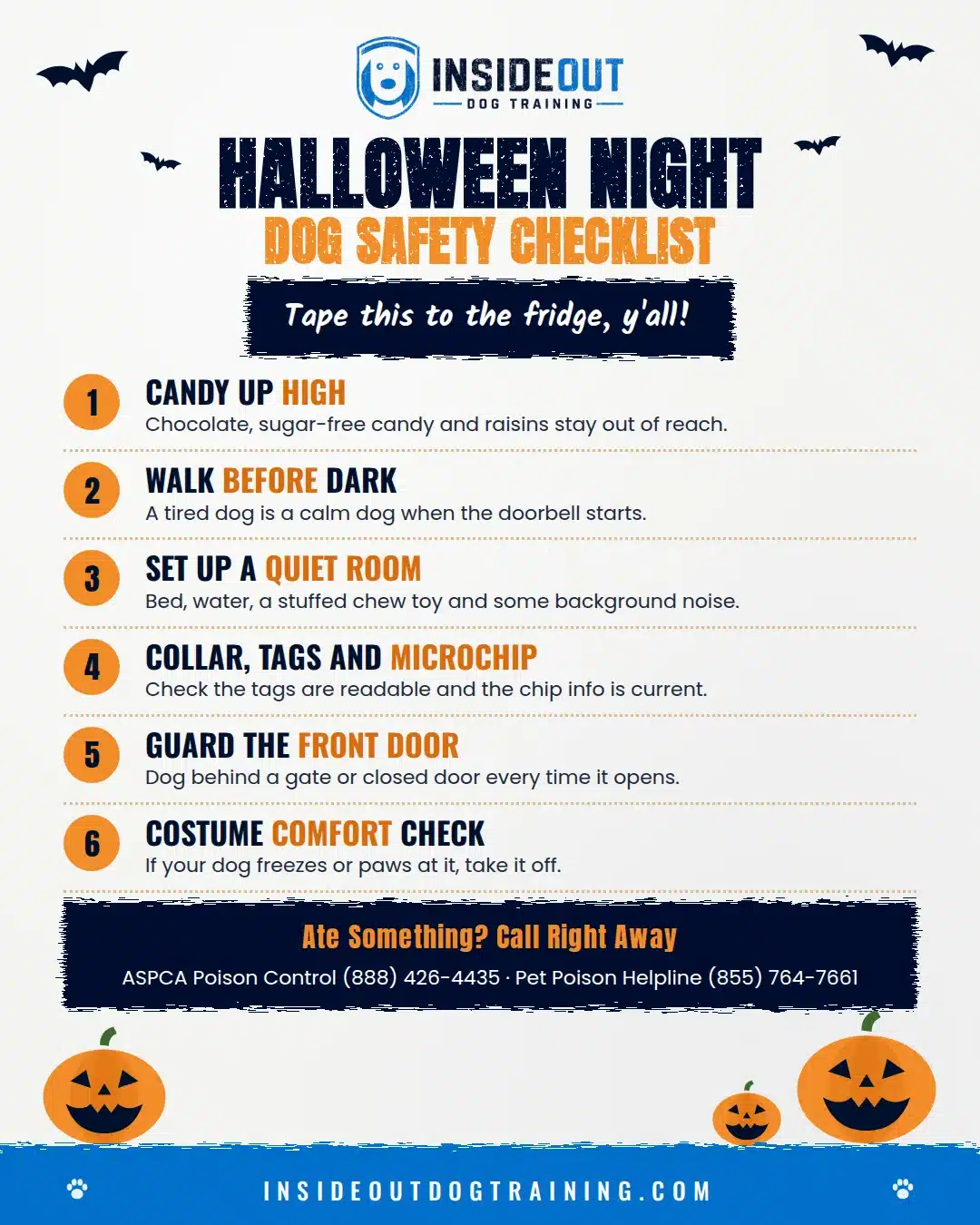
Your Halloween dog safety checklist
- Candy up high, wrappers in a lidded trash can
- Long walk and early dinner before dark
- Quiet room ready: bed, water, chew toy, background noise
- Collar and tags on, microchip info current
- Dog behind a gate or door whenever the front door opens
- Costume comfort check, or just a bandana
- Poison control numbers saved in your phone
Start now: a one-week Halloween dog safety practice plan
You wouldn’t run a marathon without training, and your dog shouldn’t face forty doorbells cold. A few minutes a day this week makes a big difference.
A week out
Ring the doorbell, then toss a treat on your dog’s bed. Repeat a few times a day. The bell starts to mean “go to your spot.”
A few days out
Try the costume on for a minute with treats. Have a family member knock in a hat or mask so strange outfits aren’t a surprise.
Halloween day
Big walk, early dinner, quiet room set up, and candy out of reach before the first knock.
Halloween dog safety FAQ
What Halloween candy is most dangerous for dogs?
Chocolate, anything sugar-free with xylitol, and raisins are the big three. Dark and baking chocolate are worse than milk chocolate. Wrappers can also cause a blockage.
My dog ate one piece of chocolate. What should I do?
Call your vet or a pet poison hotline with your dog’s weight and the type and amount of chocolate. They’ll tell you whether it’s an emergency. Don’t wait for symptoms.
Is it OK to dress my dog up for Halloween?
Yes, if your dog is relaxed in the costume and it doesn’t limit moving, seeing or breathing. If your dog freezes or paws at it, skip it.
How do I stop my dog from barking at the doorbell all night?
For Halloween night, manage it: quiet room, background noise, and hand out candy from the porch. For a lasting fix, teach a “place” command. That’s something we can help with.
Should I take my dog trick-or-treating?
No… we recommend you do not and even clicking this FAQ to find out again after this post… well ya know is already a sign. Most dogs do better at home in a quiet room.
This article is general safety information, not veterinary advice. If you think your dog ate something toxic or is hurt, call your veterinarian or a pet poison hotline right away.
Want a dog who stays calm when the doorbell rings?
Halloween is one night, but door manners last all year. Book a free consultation and we’ll build a plan for your dog. Curious about pricing first? See our dog training cost guide.
About the author: Jason Rae is a CPDT-KA certified dog trainer with nearly 24 years of experience and the founder of InsideOut Dog Training in Apple Valley, CA. He grew up in Texas and still says y’all.
